Ecommerce SEO · Shopify & WooCommerce
Ecommerce SEO Services That Turn Product Searches Into Orders
Our ecommerce SEO services help online stores in the USA and Canada get category and product pages in front of shoppers who are ready to buy. We clean up filters and duplicate URLs, fix product schema and Merchant Center feeds, speed up slow templates, and write category copy that answers what buyers ask. You see the results in orders and revenue from organic search.
✓ Category, product and filter pages fixed in order of revenue
✓ Shopify and WooCommerce specifics handled
✓ Organic orders and revenue tracked in GA4

Your monthly store report
Organic revenue, orders and top category pages, explained in plain English.
Google · Shopping · AI answers
Where your products can show up
Ecommerce SEO, explained
What Do Ecommerce SEO Services Include?
Ecommerce SEO services make an online store's category and product pages easier for Google, Bing and AI assistants to crawl, understand and show to shoppers. The work covers the store's technical setup (crawling, filters, duplicate URLs and speed), the content on category and product pages, product structured data and Merchant Center feeds, and the links that give a store authority. Done well, it is measured in orders and revenue from organic search.
Techlooker is an ecommerce SEO agency for stores in the USA and Canada. Our SEO specialists and WooCommerce developers sit on the same team, so when an audit finds a slow product template or a filter that creates thousands of junk URLs, the fix is made by people who build stores instead of being handed to another vendor.
What's included
Category and product page SEO, faceted navigation, product schema and Merchant Center, site speed and content, with a monthly revenue report.
Who it's for
Shopify and WooCommerce stores, from focused catalogs of a few hundred products to stores with thousands of SKUs and variants.
How long it takes
Crawl and indexing fixes in the first month. Category rankings usually move over a few months, and organic revenue builds over 6 to 12 months.
Platforms
Shopify and WooCommerce, including stores moving from one platform to the other or changing themes.
Why stores stall in search
Why Online Stores Get Traffic but Few Orders From Search
Most stores we audit share the same three problems. None of them gets fixed by publishing more blog posts.
Filters that create thousands of useless URLs
Every combination of size, color, price and sort order can become a new URL. Google spends its crawl time on those instead of your real categories, and the pages that should rank get split into near-duplicates.
Product pages copied from the manufacturer
When your description is the same one used on fifty other sites, Google has little reason to choose yours. Category pages that are a product grid with no text have the same problem.
Out-of-stock products handled badly
Deleting products creates broken links and throws away rankings. Leaving dead products live with no alternative frustrates shoppers. Each case needs a rule, and most stores don't have one.
What's included
Ecommerce SEO Services for Shopify and WooCommerce Stores
Every engagement starts with an audit of your catalog, templates and search data. We then pick the services that will move revenue for your store and leave out the rest.
Category page SEO
Category and collection pages target the broad searches with the most buyers. We tune titles, headings, intro copy, internal links and pagination so the right category ranks for each search.
Ecommerce SEO guide →Product page SEO
Unique descriptions, useful specs, real photos with descriptive file names and alt text, and answers to the questions shoppers ask right before they buy.
How we choose keywords →Faceted navigation and filters
We decide which filter combinations deserve their own indexable page, like “men's waterproof hiking boots”, and keep the rest out of the crawl with canonicals, noindex or robots rules.
Technical SEO guide →Product schema and Merchant Center
Product and offer structured data with price, availability and shipping that match the page, plus a clean Merchant Center feed so products are eligible for free listings.
AI SEO services →Store speed and Core Web Vitals
Image compression, lighter themes, fewer apps and plugins, and caching that still works with carts and checkout, so product pages load fast on phones.
Store speed optimization →Shopify SEO
Collection and product URL handling, canonical internal links, theme edits for titles and schema, and an audit of the apps that add weight to every page.
SEO consulting →WooCommerce SEO
Hosting, caching, permalink and filter plugin setup, and template fixes made by developers who build WooCommerce stores on WordPress.
WooCommerce development →Replatforming and redesigns
Redirect maps for every product and category URL, staging checks and post-launch monitoring, so a new platform or theme keeps the rankings the old store earned.
Migration checklist →Buying guides and earned links
Comparison pages and how-to-choose guides that answer pre-purchase questions and feed shoppers into categories, plus outreach for links from real, relevant sites.
Link building services →
Find Out Which Categories Could Earn More
Our free ecommerce SEO audit shows which category and product searches bring buyers in your niche, which competitors win them today, and what is holding your store back.

Where we start in a store
We Start With the Pages That Already Sell
A store audit can list thousands of issues because every product multiplies them. We sort the findings by revenue at stake: which categories and products earn money now, which could, and what is stopping them.
Top revenue categories
Categories that already bring orders get fixed first, because small gains there are worth the most.
Crawl waste from filters
If Google is busy crawling sort orders and color filters, your new products wait longer to be found.
Templates before single products
One fix to a product template improves every product that uses it, which beats editing pages one at a time.
Searches with a purchase behind them
“Trail running shoes size 11” comes before “how to choose running shoes”, though both have a place.
How it works
Your First 90 Days of Ecommerce SEO With Our Team
Each month you know what we are working on, which pages it touches and what it should change in orders.
Store audit and tracking
We crawl the store, review Search Console and Merchant Center, check GA4 ecommerce tracking, and learn which products carry your margins.
Crawl cleanup and quick wins
Filter and duplicate URL rules, broken links from deleted products, and title fixes on top categories go live first.
Category and product templates
We improve category copy, product templates and schema, and fix the speed problems that hurt mobile shoppers most.
Content, links and first report
Buying guides start publishing, link outreach begins, and your first full report ties the changes to organic orders and revenue.

Are Your Products Showing Up in Google Shopping?
Free listings in Shopping depend on a clean Merchant Center feed and product data that matches your pages. We will check yours and show you what is missing.
Platforms compared
Shopify SEO vs WooCommerce SEO: What Changes and What Doesn't
The platform changes the technical details, not the strategy. Both can rank well. The difference is what each one handles for you automatically and what it gets in the way of.
Shopify
Shopify SEO
Strengths
Managed hosting, a fast checkout and automatic sitemaps out of the box.
Watch out for
Fixed /collections/ and /products/ URL paths, products reachable through several collection URLs, and apps that add slow scripts.
What we fix
Internal links that point to the canonical product URL, theme code for titles and schema, and an app audit for speed.
WooCommerce
WooCommerce SEO
Strengths
Full control over URLs, templates and hosting, with WordPress content tools built in.
Watch out for
Underpowered hosting, heavy themes, plugin conflicts and filter plugins that create crawlable parameter URLs.
What we fix
Hosting, caching and template performance, filter rules and schema, handled by our own WordPress developers.
Both
What stays the same
Category pages
They still target the biggest searches and need useful copy and strong internal links.
Product data
Price, availability and shipping must agree on the page, in the schema and in the feed.
Content
Buying guides and comparisons that answer what a shopper wants to know before choosing.
How We Handle Out-of-Stock, Discontinued and Seasonal Products
Out-of-stock handling is one of the most common ecommerce SEO mistakes, and the right answer depends on whether the product is coming back. Google's page on SEO best practices for ecommerce sites covers the basics. This is the rule set we put in place for each store.
01
Temporarily out of stock
Keep the page live and indexable, show a restock date if you have one, mark availability as out of stock in the schema and the feed, and link to close alternatives.
02
Discontinued with a clear replacement
Redirect the old product URL with a 301 to the newer model, so links and rankings carry over to a page that can still sell.
03
Discontinued with no replacement
Redirect to the closest category only if it serves the same shopper. If nothing fits, return a 404 or 410 instead of sending everything to the homepage.
04
Seasonal products and collections
Keep one permanent URL for seasonal categories like “winter boots” or holiday gift sets and update it each year, so it keeps the authority it earned last season.
05
Variants and sizes
Decide whether variants share one URL or get their own based on whether people search for them separately, then set canonicals to match.
06
Monitor it every month
We check Search Console for new 404s, soft 404s and redirect chains after every product import or catalog cleanup, before they cost you traffic.
Why Techlooker
Why Stores Choose Techlooker as Their Ecommerce SEO Agency
Plenty of agencies can run a crawler on a store. These are the things we do differently for online stores, and the things you should hold us to.
SEO and store developers on one team
Filter plugins, theme code and slow product templates get fixed by people who build online stores, not passed to a ticket queue somewhere else.
Reports in orders and revenue
We check your GA4 ecommerce tracking first, then report organic orders, revenue and top landing pages next to the rankings behind them.
Templates before one-off edits
We fix the templates that control thousands of pages before touching single products, so the work grows with your catalog.
You own everything
Your store, content, Search Console, Merchant Center and analytics stay in your accounts. We work inside them, and nothing is held back if we part ways.
Built for the USA and Canada
We plan for stores that sell in both countries, with cross-border shipping details and French-language pages for shoppers in Quebec.
Content written by people
Category copy and buying guides are written and edited by people who check the product details before anything goes live.
Ways to work with us
Choose How We Work on Your Store
Some stores want us to run SEO end to end. Others have a marketer or developer in-house and need a plan they can follow. Pick the model that fits.
Monthly ecommerce SEO
Technical fixes, category and product work, schema, content and links each month, with a revenue-focused report.
Best for: stores that want steady organic growth without hiring
Store audit and roadmap
A full audit of crawling, templates, filters, schema and content, turned into a ranked plan your team can run with.
Best for: stores with their own developers
Migration support
Redirect mapping, staging checks and post-launch monitoring when you move to Shopify or WooCommerce or change your theme.
Best for: stores planning a platform or design change
Ecommerce SEO consulting
Regular strategy calls, reviews of new categories and launches, and answers when Google changes something.
Best for: in-house teams who do the work themselves
Before you hire anyone
What Good Ecommerce SEO Looks Like, and the Red Flags
What you should expect
✓ An audit that names specific templates, filters and URLs
✓ Work prioritized by revenue, not by issue count
✓ Organic orders and revenue in every report
✓ Full access to your own Search Console, GA4 and Merchant Center
✓ A written plan for out-of-stock and discontinued products
Red flags
✕ Guaranteed #1 rankings for your products
✕ Auto-generated pages for every filter combination
✕ AI-spun product descriptions published without review
✕ Traffic charts with no revenue in the report
✕ An agency that keeps your feed or accounts in its own name
Google's short guide, Do you need an SEO?, is worth reading before you sign with any agency, including us.
Related services
Related Services for Online Stores

Want the Page-by-Page Checklist?
Our ecommerce SEO guide walks through what to do on your homepage, category pages, product pages and filters, with examples you can apply to your own store.
FAQ
Ecommerce SEO Services: Common Questions
Straight answers to what store owners ask before they hire an ecommerce SEO agency. Don't see yours? Ask us and a specialist will reply.
Ask an Ecommerce SEO Specialist
How much do ecommerce SEO services cost?
It depends on the size of your catalog, how competitive your products are and how much technical cleanup the store needs. We quote a fixed monthly scope after a free audit, so you know what you are paying for before you commit.
How long does ecommerce SEO take to show results?
Crawl and indexing fixes can show up in Search Console within weeks. Category rankings for competitive terms usually take several months, and organic revenue keeps building as content and links add up. Plan on a 6 to 12 month view, not a 30 day one.
Is Shopify or WooCommerce better for SEO?
Both can rank well. Shopify handles hosting and the basics but limits your URL structure, and apps can slow pages down. WooCommerce gives full control over URLs, templates and speed, but needs good hosting and development. Choose on catalog, team and budget more than on SEO.
Should out-of-stock products stay on my site?
If the product is coming back, yes. Keep the page live, mark it out of stock on the page and in the schema, and suggest alternatives. If it is gone for good, redirect it to a true replacement or the closest category, or let it return a 404 or 410 when nothing fits.
How do you handle faceted navigation and filters?
We pick the filter combinations people actually search for and give those a proper indexable page with its own title and copy. Everything else is kept out of the index with canonical tags, noindex or crawl rules, in line with Google's guidance on managing faceted navigation URLs.
Do you set up product schema and Google Merchant Center?
Yes. We add or fix Product and Offer structured data so price, availability and shipping match what the page shows, and clean up your Merchant Center feed so products are eligible for free listings. Google explains the options in its product structured data documentation.
Should I rewrite manufacturer product descriptions?
For products that bring revenue or have real search demand, yes. Unique copy with useful specs and answers to common questions gives Google a reason to rank your page over stores using the same text. For low-value products, a better template often matters more.
How is ecommerce SEO different from regular SEO?
The basics are the same, but stores have problems most sites don't: thousands of similar pages, filters, variants, stock changes and product feeds. Ecommerce SEO is mostly about controlling those at the template level and putting effort where the revenue is.
Can you help with SEO when we move to a new platform?
Yes, and it is best to bring us in before the move. We map every old URL to its new one, check the staging site, and watch rankings and errors after launch. Our website migration SEO checklist shows the steps.
Do you write content for online stores?
Only where it helps sell. Category copy, buying guides, comparisons and how-to-choose pages for your main categories tend to earn links and send shoppers into category pages. Everything is written and edited by people who check the product facts.
How do you measure ecommerce SEO results?
In orders and revenue from organic search first. We check your GA4 ecommerce tracking, then report organic revenue, top landing pages, category rankings and Search Console clicks each month, with a note on what changed and why.
Can my products show up in ChatGPT and Google's AI answers?
They can, and the same groundwork helps: accurate product data, clear category and product pages, and reviews and mentions on other sites. We can check how AI assistants describe your brand and products for your main buying questions and show you the gaps.
Do I keep my store and accounts if we stop working together?
Yes. Your store, content, Search Console, Merchant Center and analytics stay in your name. We work inside your accounts, not ours.
What do you need from me to get started?
A staff account on your store, access to Search Console, GA4 and Merchant Center, and a 30-minute call about your best-selling products, margins and seasonal peaks. We take it from there.
Keep learning
Ecommerce SEO Guides From Our Team

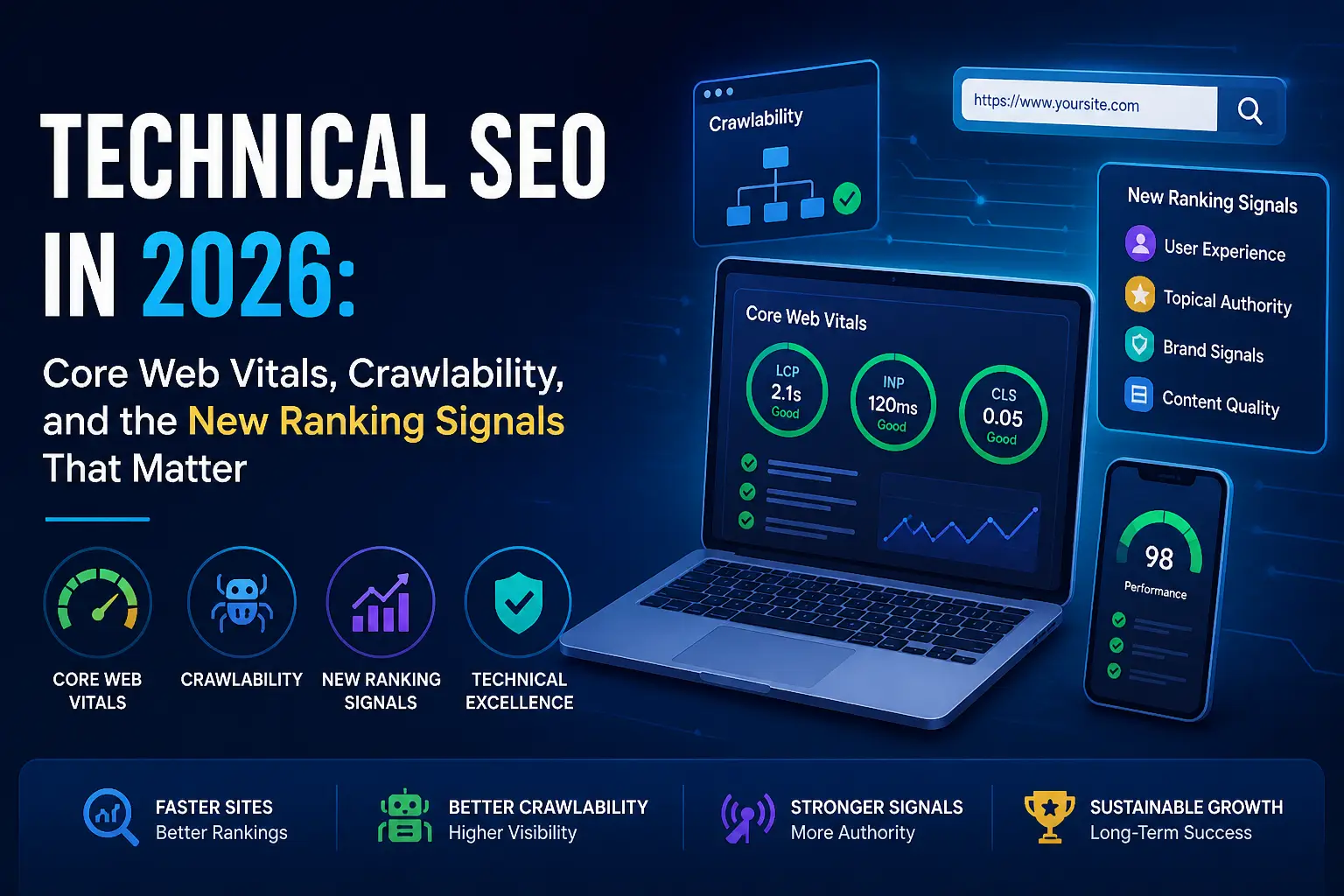
Technical SEO in 2026: Core Web Vitals, Crawlability and the Signals That Matter
Read the guide →